Where to stay in Hanoi: the best areas
Old Quarter, French Quarter, Ba Dinh or West Lake? Who each Hanoi area suits, how the airport bus reaches it, and what to check before you book a room.

On this page
At a glance
| Where | Hanoi, the capital of Vietnam, on the Red River in the north. |
|---|---|
| Short answer | First visit: the Old Quarter or the streets around Hoan Kiem Lake. Calmer and grander: the French Quarter. Sights and lakeside lanes: Ba Dinh and Truc Bach. A longer, slower stay: West Lake (Tay Ho). |
| Airport bus | Express 86 runs between Noi Bai Airport and Hanoi Station through the Old Quarter edge and the French Quarter. 50,000 VND per person, about 60 minutes, one bus every 45 minutes. First bus 5.30am from Hanoi Station; last bus 10pm from the airport.As of 2026-10-20 · Source: Hanoi BRT Fast Bus Enterprise (Hanoi Transport Corporation) · Recheck by 2027-01-20 |
| Airport taxi | We give no taxi fare: we found no current official one. The UK advice says metered taxis from larger firms are generally reliable, and suggests official apps such as Grab or XanhSM. Confirm the fare in advance or ask for the meter, as Canada advises.As of 2026-10-20 · Source: UK FCDO; Government of Canada · Recheck by 2027-04-20 |
| Area names | Since 1 July 2025, Hanoi has two levels of local government: the city and 126 wards and communes. Some new wards reuse old district names but cover a different area.As of 2026-10-20 · Source: Resolution No. 1656/NQ-UBTVQH15; Vietnam Law Magazine (VNA) · Recheck by 2027-04-20 |
| Guest registration | Canada’s advice says you must report your presence to the local authorities on arrival. Commercial stays generally do it for you; in a private home, your host or you must do it.As of 2026-10-20 · Source: Government of Canada travel advice · Recheck by 2027-04-20 |
| Weather | The national tourism site names September to November as the best time. The UK advice gives June to September as the rain season in the north, with flooding common along the Red River.As of 2026-10-20 · Source: Vietnam National Authority of Tourism; UK FCDO · Recheck by 2027-04-20 |
| Entry and visa | Depends on your passport. Check the rule for your passport with your government’s travel advice and Vietnam’s immigration authorities before you book.As of 2026-10-20 · Source: UK FCDO; Government of Canada · Recheck by 2027-04-20 |
| Health | We give no health advice. For vaccines and health entry rules, see the official source.Source: UK FCDO, Vietnam health advice |
- Facts checked
- Next recheck
- Entry rule shown for
- None. For entry rules, check your own government’s travel advice.
How this guide works
This guide is research, not a first-hand visit. We built it from the official sources listed at the end, as of the date in the ticket.
It compares the areas of central Hanoi where most visitors stay, and names no hotel. It answers three questions in order: which area suits your trip, how you get there from the airport, and what to check about the room before you pay.
The short answer
For a first visit of a few nights, stay in the Old Quarter or around Hoan Kiem Lake: most first-visit sights are a walk away. For wider streets and a calmer night, look at the French Quarter. For the mausoleum, the citadel and the lakes, Ba Dinh and Truc Bach put you closer. For a week or more, West Lake (Tay Ho) gives you a long lakeshore, at the cost of longer rides into the old centre.
| Area | Suits | Trade-off | Airport bus 86 |
|---|---|---|---|
| Old Quarter | A first visit, street food, walking | Busy, narrow streets; late nights on bar streets such as Ta Hien | Hang Tre, Long Bien Transfer Point |
| Hoan Kiem Lake and French Quarter | Walkers, museums, colonial streets and parks | A walk to the Old Quarter’s food streets | Hanoi Post Office, Opera House, Ly Thuong Kiet |
| Ba Dinh and Truc Bach | The mausoleum, the citadel, lakeside lanes | A longer walk to Hoan Kiem Lake | Cua Bac intersection |
| West Lake (Tay Ho) | Longer stays, cycling, cafes | Further from the old centre | Lac Long Quan, Au Co |
| Near Hanoi Station | Early trains, the end of the bus line | A walk or short ride to the Old Quarter | Hanoi Station |
The bus stops come from the operator’s route list.
A note on area names and addresses
On 1 July 2025, Hanoi moved to two levels of local government. A Vietnam News Agency (VNA) report, published by Vietnam Law Magazine, says 526 communes and wards became 126 units: 51 wards and 75 communes. The district level, which held names such as Hoan Kiem, Ba Dinh and Tay Ho, no longer runs local government. Some new wards reuse those names, such as Hoan Kiem ward and Ba Dinh ward, but cover a different area from the old district.
This guide uses the old names as area names. A ward name on a booking may not match an older map, or may match it in name only. Before you book, check the location on a map, not only the name in the listing.
The Old Quarter
The national tourism site describes the Old Quarter as “a single square kilometre comprised of 36 streets”, north of Hoan Kiem Lake. Its guild streets were named for 36 trades that once supplied the royal court at the Thang Long Citadel. A few still sell what their names promise: Hang Bac for silver and jewellery, Hang Ma for religious goods and festival decorations, and Hang Gai, now called Silk Street, for fabrics and tailoring.
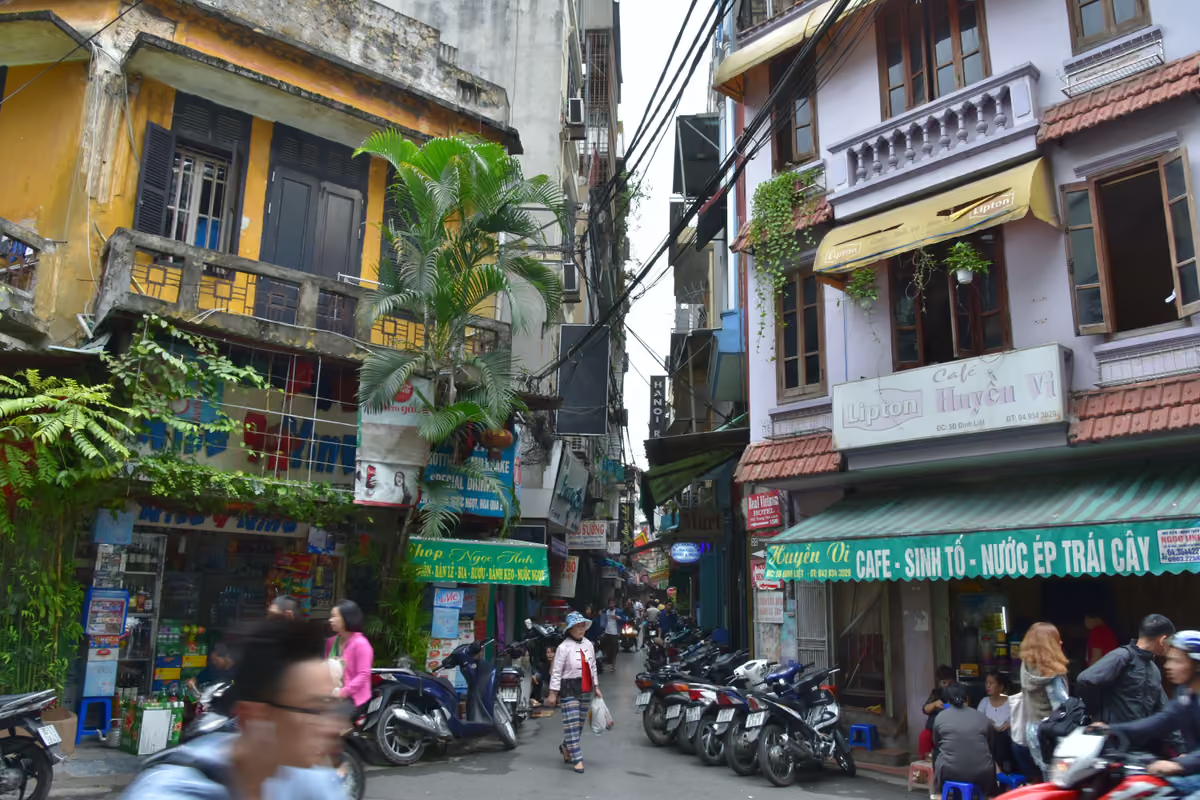
Fig. 1 A street in the Old Quarter. Photo: Richard Mortel (opens in a new tab) · CC BY 2.0 (opens in a new tab) · modified
Stay here if you want to walk out of the door into the city: street food, cafes, temples and the lake are all close. The tourism site suggests a cyclo tour to get your bearings, and calls the Old Quarter “a hectic place”, with shops spilling onto pavements and motorbikes in narrow streets. Canada’s travel advice adds that pavements may be obstructed and crossing roads can be difficult, so allow for that with small children, a pushchair or a mobility aid.
Nights run late on Ta Hien Street, where, the tourism site says, locals and backpackers drink fresh draught beer on small plastic stools. If you sleep lightly, ask for a room at the back, away from the bar streets.
The typical Old Quarter “tube houses” have narrow fronts but are built deep and high, with inner courtyards to let light in. That shape matters when you choose a room (see the section on windows).
Hoan Kiem Lake and the French Quarter
Hoan Kiem Lake sits between the Old Quarter to the north and the French Quarter to the south. The tourism site describes Hanoi exercising there at dawn and strolling at sunset, and says the lake is closed to vehicles on weekends. A room near the lake puts you in the middle of that, crowds included.
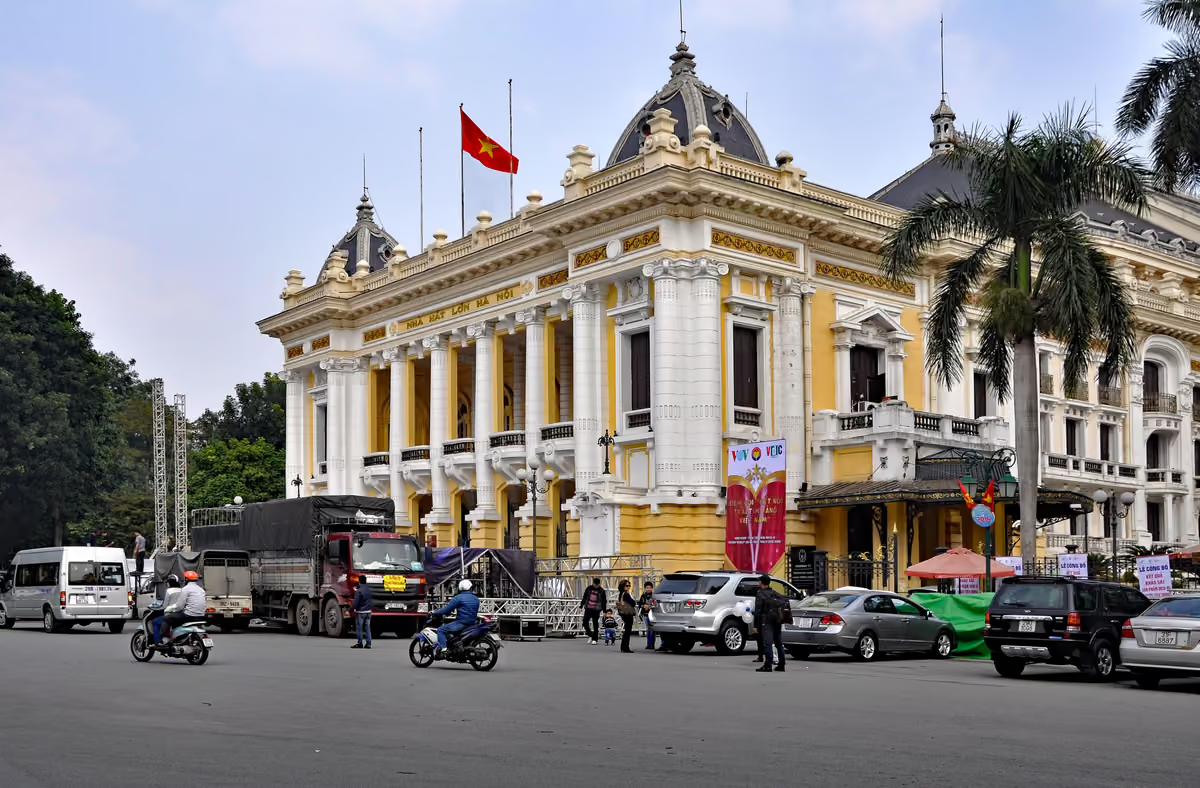
Fig. 2 The Hanoi Opera House in the French Quarter. Photo: P. Hughes (opens in a new tab) · CC BY 4.0 (opens in a new tab) · modified
South of the Old Quarter, the tourism site’s walking tour describes “spacious streets, verdant parks and French colonial architecture”, and says the French Quarter “is known for high-end stores and colonial-era architecture”. The walk passes St Joseph’s Cathedral, the Vietnamese Women’s Museum, Thien Quang Lake, Reunification Park and the Hanoi Opera House, which the tourism site’s attractions page calls the largest theatre in Vietnam. As of 20 October 2026, that page lists the Opera House as “currently under renovation”, so check before you plan an evening there.
The French Quarter suits you if you like wide pavements, trees and a short walk to the Old Quarter without sleeping in it. Into the city, Express 86 stops at 162 Tran Quang Khai and the Opera House before Hanoi Station. Out to the airport, it stops at 59 Ly Thuong Kiet and the Hanoi Post Office by the lake.
Ba Dinh and Truc Bach
West of the Old Quarter, Ba Dinh holds the city’s political and historic core. The tourism site lists the Ho Chi Minh Mausoleum and the One Pillar Pagoda in Ba Dinh, and places the mausoleum “in the centre of the grandiose Ba Dinh Square”. Its third walking tour runs past the train tracks on Phung Hung Street and the north gate of the Hanoi Citadel to Truc Bach Lake, which it calls “one of the most scenic corners of Ha Noi”.
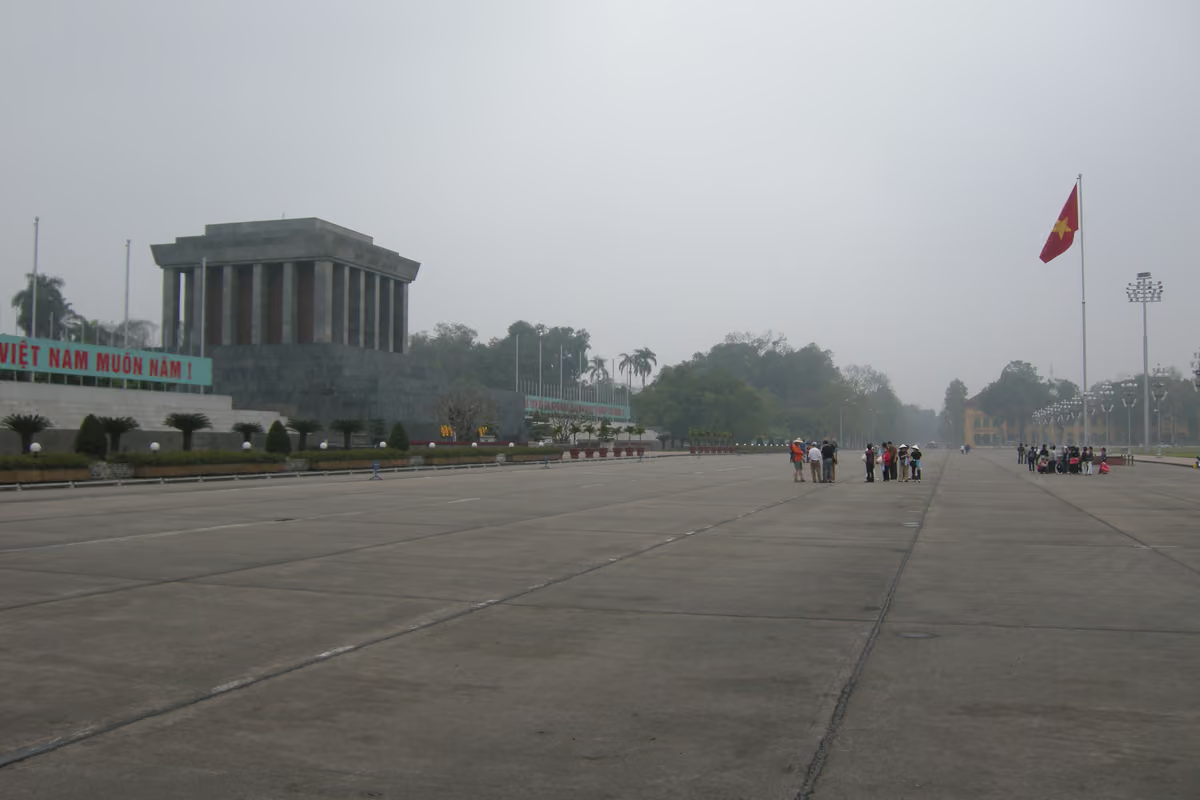
Fig. 3 Ba Dinh Square and the mausoleum. Photo: Vyacheslav Argenberg (opens in a new tab) · CC BY 4.0 (opens in a new tab) · modified
The walk takes in Quan Thanh Taoist temple, Thanh Nien Street and Ngu Xa, a street on Truc Bach Lake known for pho cuon rolls. The Temple of Literature, in Dong Da, lies south of Ba Dinh.
Choose this area if your plan centres on the mausoleum, the citadel and the lakes. The airport bus stops near the Cua Bac intersection in both directions. Mausoleum hours change with the season, and it closes for some weeks each year, so check before you plan a stay around a visit.
West Lake (Tay Ho)
West Lake lies north of Ba Dinh and Truc Bach. The tourism site describes “the 17-km shoreline” as “lined with hip cafes, ancient pagodas and picturesque gardens, perfect for cyclists”. Its weekend plan treats the lake as a stop “on your way back to town”, which tells you how it relates to the old centre: close, but not next door.
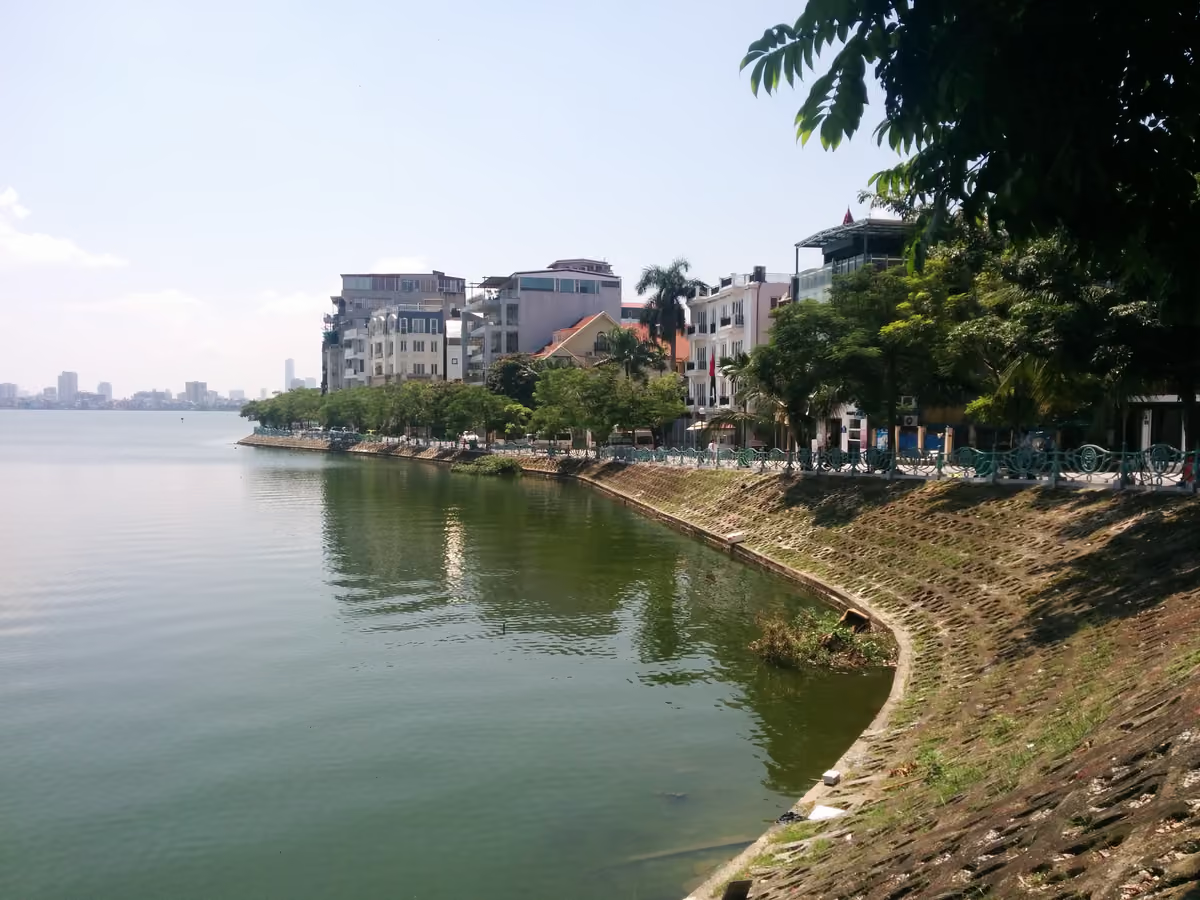
Fig. 4 The shore of West Lake on a clear day. Photo: Amenoc (opens in a new tab) · CC BY-SA 4.0 (opens in a new tab) · modified
West Lake suits a week or more, morning walks or rides along the water, and a quieter street to come home to. Expect a taxi, a ride-hailing car or the bus into the Old Quarter most days.
The airport bus runs along the lake on both legs: 523 Lac Long Quan into the city, Quang An Market and Au Co on the way out. The operator names the lakeshores and the walking streets of Hoan Kiem Lake and West Lake as sights on the route.
Near Hanoi Station
Hanoi Station is the end of the airport bus line and the city’s main railway station. The tourism site says the Reunification Express links Hanoi to Hue and Ho Chi Minh City. A room within walking distance helps with an early train or a late bus arrival. Check whether the room faces the main road.
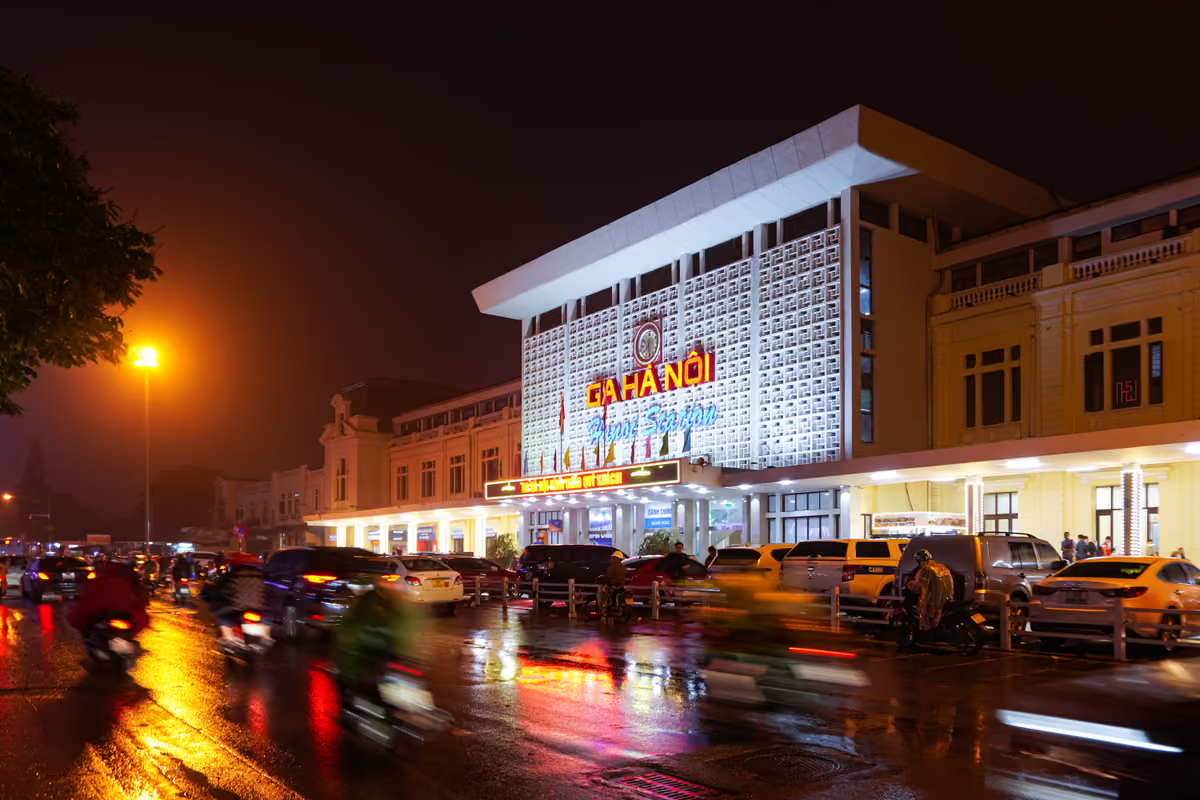
Fig. 5 Hanoi Station in the evening. Photo: NKSTTSSHNVN (opens in a new tab) · CC BY-SA 4.0 (opens in a new tab) · modified
Further out: Cau Giay and the west
The west, around Cau Giay, sits further from the old centre. The tourism site places the Vietnam Museum of Ethnology there, “a 20-minute taxi drive from the centre”. For a first visit built around the old city, the areas above are closer.
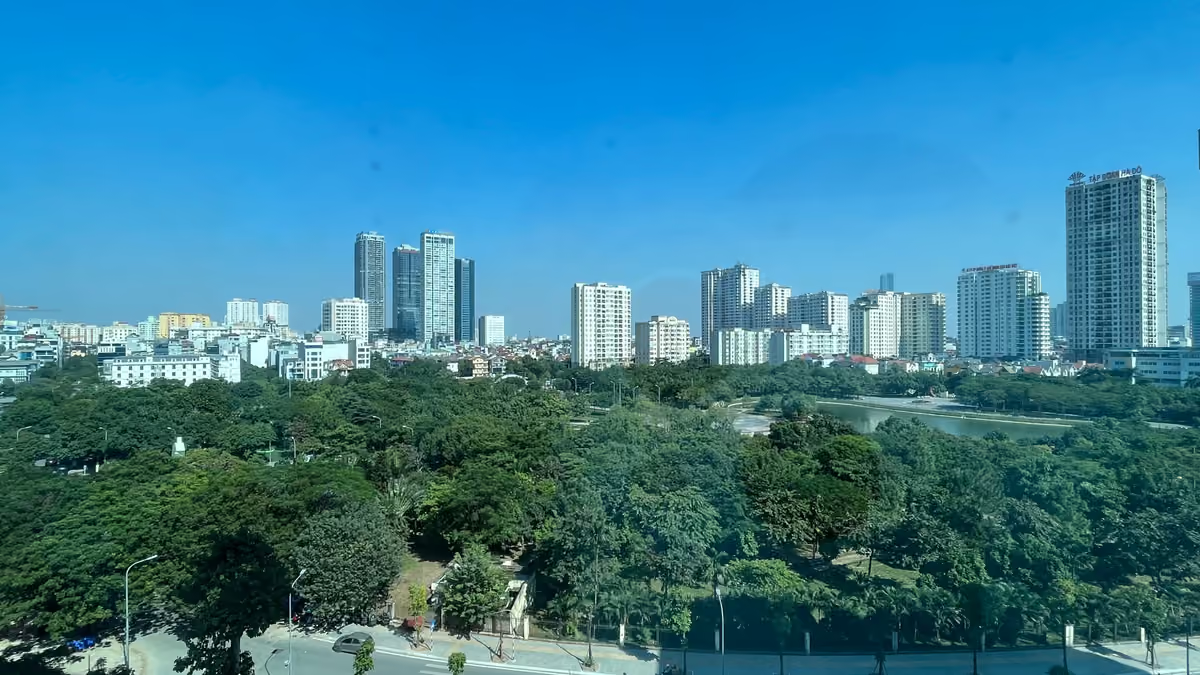
Fig. 6 Cau Giay Park, with tower blocks beyond. Photo: Tttrung (opens in a new tab) · CC BY-SA 4.0 (opens in a new tab) · modified
The second airport bus, Express 68, runs from Noi Bai along Vo Chi Cong and Lang Street to Yen Nghia Bus Station in Ha Dong. The operator says it connects with the elevated railway at Lang Station, costs 55,000 VND per person and takes about 90 minutes end to end.
From Noi Bai Airport to your area
Noi Bai International Airport is north of the city, across the Red River. You have three main ways in: the Express 86 bus, a taxi or a ride-hailing car.
Express 86 is run by Hanoi BRT Fast Bus Enterprise, a branch of Hanoi Transport Corporation. The fare is 50,000 VND per person, with one bus every 45 minutes and about 60 minutes for a ride. The first bus leaves Hanoi Station at 5.30am and the last bus leaves the airport at 10pm. The operator gives these as a guide: its timetable page says the times are estimated, and it runs a 24-hour hotline.
Fig. 7 Bus 86 from Noi Bai into Hanoi Source: Bus Express 68 – 86, route list (opens in a new tab), October 2026.
The stops come from the operator’s list for the airport-to-city direction. One stop, at a hotel between the Opera House and Hanoi Station, is not shown. The area notes are ours. The operator gives no time for each stop.
For a taxi, the national tourism site gives a ride of about 45 to 60 minutes, depending on traffic. We give no taxi fare, because we found no current official one. Canada’s advice is to confirm the fare in advance or insist that the driver uses the meter.
The UK travel advice says metered taxis from larger firms are generally reliable, and suggests official taxi-hailing apps such as Grab or XanhSM. It warns of scammers who claim to work for those apps, so book the whole journey in the app, and says unarranged offers of free bus transfers to hotels may be scams. Canada adds: know your hotel’s address and neighbourhood, so a driver cannot take you to the wrong place.
Choosing the room: window or no window
In Hanoi, the building can matter as much as the area. In a deep, narrow tube house, a room in the middle or at the back may face a courtyard, a light well or no outside wall at all.
Read what the room description says about the window before you look at the photos. If it says nothing, ask the property in writing. Three questions cover most cases:
- Does the room have a window to the outside, to an inner courtyard, or none?
- Does the room face the street or the back of the building?
- Which floor is it on, and is there a lift?
A street-facing window gives light and noise together; a back room can be quieter and darker. Near a bar street such as Ta Hien, that choice may decide how well you sleep.
Comparing costs
We do not quote room prices: they change by date and demand faster than we can check them. Instead, compare this way.
- Compare like with like. Search the same dates in two or three areas, with the same room type, before you decide that one area is cheaper.
- Count the transport. A cheaper room at West Lake or in the west can cost more once you add daily rides into the old centre. The bus fares above help you do that sum.
- Price the room you want, not the cheapest one. A windowless back room and a room with a view in the same building are different products. Compare the one you would actually choose.
Check-in, passports and guest registration
Canada’s travel advice says you must report your presence to the local authorities on arrival, and explains how this works in practice. A hotel, guesthouse or other commercial stay generally files the declaration for you. In a private home, your host must notify the authorities, or you must do it at the nearest police station. Both host and guest may be fined if the stay is not reported.
Staff may ask for your passport at check-in and copy it. Canada notes that some may want to keep it until you leave, but that there is no known legal requirement for them to hold it, so ask for it back once check-in is complete. The UK advice warns against handing over your passport as a guarantee, for example to a landlord or a motorbike rental shop.
The UK advice also says you must always carry photographic ID, and that the authorities accept a printed copy of your passport photo page and visa. Read the full rules on the Government of Canada’s Vietnam page (opens in a new tab) and the UK’s Vietnam safety advice (opens in a new tab) before you go.
Weather and the rainy season
The national tourism site describes Hanoi as a city of four seasons: cool, drizzly winters, hot and humid summers, and short springs and autumns. It names September to November as the best time, with May also pleasant, and warns that many businesses close during the Tet holidays.
The UK travel advice gives June to September as the rain season in the north. It says seasonal flooding is common in and around Hanoi, particularly along the Red River, and can disrupt travel. For tropical storms, it points to Vietnam’s National Center for Hydrometeorological Forecasting, and says to follow the advice of local authorities. It also notes that petty crime tends to rise around Christmas and Tet. In the wet months, a room in a central area you can walk around reduces how much you depend on roads and rides.
Is Hanoi safe to walk around at night?
The Government of Canada rates Vietnam at “take normal security precautions”. The UK advice says violent crime against foreigners is rare, but that theft and pickpocketing occur regularly, and bag snatching by thieves on motorbikes is common. It suggests you hold bags in front of you or on the side away from the traffic.
The UK advice also reports sexual assaults in the main tourist areas, often linked to unlicensed taxi drivers, and harassment of women walking alone. It suggests pre-arranged transport or an official app such as Grab or XanhSM.
These points apply in every central area here; we can source no difference in risk between them. Save your accommodation’s location on a map app, as the UK advice suggests, so you can find your way back after dark.
Questions before you go
What is the best area to stay in Hanoi for a first visit?
The Old Quarter, or the streets around Hoan Kiem Lake. Both are on the Express 86 airport bus route.
Old Quarter or French Quarter?
The Old Quarter for street life, food and short walks, with noise and crowds. The French Quarter for wider streets, trees and a calmer evening, with the Old Quarter a walk away.
Is West Lake too far from the centre?
Not for a longer stay. You will ride into the old centre more often, but the airport bus runs along the lake.
Do I need to register with the police?
Canada’s advice says your presence must be reported on arrival. A hotel generally does it for you; in a private home, your host or you must. Check the current rules on an official government site before you go.
Sources
- Ha Noi, Vietnam National Authority of Tourism (opens in a new tab)
- Explore the Old Quarter your way, Vietnam National Authority of Tourism (opens in a new tab)
- 3 walking tours of Ha Noi, Vietnam National Authority of Tourism (opens in a new tab)
- 11 must-see attractions in Ha Noi, Vietnam National Authority of Tourism (opens in a new tab)
- The perfect weekend in Ha Noi, Vietnam National Authority of Tourism (opens in a new tab)
- Frequently Asked Questions, Vietnam National Authority of Tourism (opens in a new tab)
- Bus Express 68 – 86, introduction, Hanoi BRT Fast Bus Enterprise (Hanoi Transport Corporation) (opens in a new tab)
- Bus Express 68 – 86, bus schedule, Hanoi BRT Fast Bus Enterprise (Hanoi Transport Corporation) (opens in a new tab)
- Restructuring of administrative units opens up new development space for Hanoi, Vietnam Law Magazine (VNA) (opens in a new tab)
- Resolution No. 1656/NQ-UBTVQH15 on the reorganisation of commune-level units of Hanoi, National Assembly Standing Committee, 16 June 2025 (English translation, LuatVietnam) (opens in a new tab)
- Vietnam travel advice, Government of Canada (opens in a new tab)
- Vietnam travel advice: safety and security, UK FCDO (opens in a new tab)
- Vietnam travel advice: entry requirements, UK FCDO (opens in a new tab)
- Vietnam travel advice: health, UK FCDO (opens in a new tab)
Found an error? Tell us. How we check facts.